
You hear “radiation” and think danger. Your charger hums. Your phone warms up. You want the facts, not fear.
A charging phone emits low-level electromagnetic radiation1. Certified chargers keep emissions within strict EMC limits, so exposure stays far below harmful levels for everyday use.
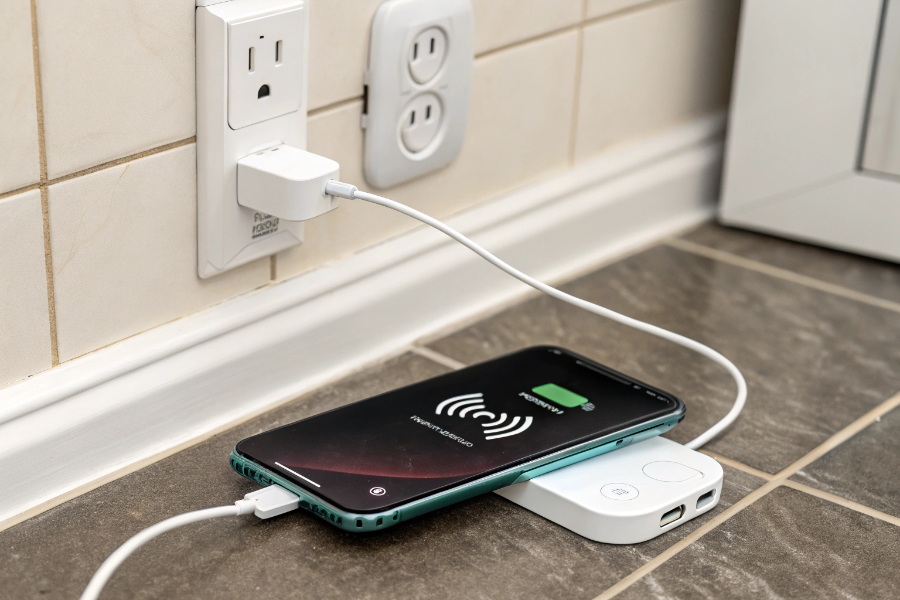
I work with compliance labs and production lines. I trust data over rumors. EMC testing2 sets limits. Certified devices meet those limits. That is what protects you.
Is it safe to be near a charging phone?
Headlines can sound scary. You see words like EMF and RF and think risk. You want a clear answer you can use today.
Yes. It is safe to be near a charging phone when you use certified chargers3 and cables. Emissions are regulated by EMC standards and sit far below levels known to cause harm.
What “safe” means in labs and in real rooms
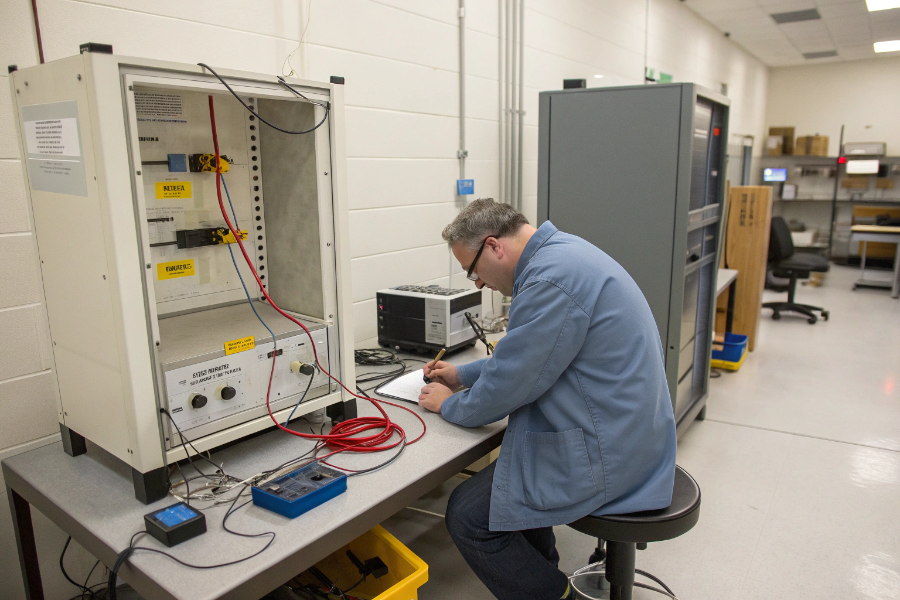
I send chargers to accredited labs for EMC and safety. Engineers test radiated and conducted emissions against standards such as FCC/CE for EMC and UL/ETL for electrical safety. These tests measure fields in worst-case modes and across frequencies. Results must fall under defined limits. A product that passes and earns certification keeps radiation in a small, controlled band. It also includes protection for over-current, over-voltage, and temperature. Real rooms are less noisy than lab chambers, so your exposure is usually even lower. If you keep devices ventilated, use original or certified accessories, and avoid damaged cables, you keep both heat and emissions low.
| Topic | What labs check | What it means to you |
|---|---|---|
| EMC limits | Radiated and conducted emissions | Low field strength near the device |
| Safety (UL/ETL) | Insulation, leakage, temperature | Fire and shock protection |
| SAR (phones) | RF absorption4 near the head/body | Safe RF levels during calls |
| Real use | Ventilation and cable quality | Lower heat and stable charging |
Which is safer, wired or wireless charging5?
You hear mixed advice. Some say wireless is the future. Some say wires are safer. You want a simple rule you can rely on.
Wired charging emits less stray electromagnetic energy than wireless charging5. But both are safe when certified. For minimal emissions and higher efficiency, wired wins.
Why wired emits less, and how to choose well
I build and test both types. Wireless chargers use inductive coils6. They create alternating magnetic fields to transfer power across an air gap. That means higher stray fields and more heat if alignment slips. Wired chargers deliver power over copper, with tighter control and less radiated energy. Efficiency is also higher with wires, so less energy turns into heat. Still, wireless chargers that pass EMC and safety tests operate within strict limits. If you prefer wireless for convenience, choose certified models, align the phone carefully, and keep the area ventilated. For travel and long sessions, I still prefer a PD wired charger for cooler, cleaner power.
| Factor | Wired charging | Wireless charging |
|---|---|---|
| Emissions | Lower | Higher, but regulated |
| Efficiency | Higher (less heat) | Lower (more heat if misaligned) |
| Speed | High with PD/PPS | Good, depends on coil and phone |
| Convenience | Cable needed | Just place on pad |
| Best use | Daily fast, cool charging | Desk convenience and top-ups |
What devices emit the most radiation?
You see many electronics at home and work. You wonder which ones matter. You want a priority list, not noise.
High-power RF transmitters emit the most radiation in normal life: cell towers, Wi‑Fi routers, and phones during calls. Chargers and power adapters7 emit much less and must meet EMC limits.
How I rank everyday emitters, with simple habits that help
In lab reports and field measurements, transmitters that send data on purpose lead the list. A phone at your ear in a weak-signal area ramps up power. A Wi‑Fi router near your desk radiates constantly. A microwave oven is shielded but powerful at 2.45 GHz; leakage stays within safety limits when intact. Chargers are different. They switch power but do not transmit data over the air. Their emissions are byproducts, not the goal, and they are held to strict caps under EMC rules. If you want to reduce exposure, you can keep routers a few feet away, use speakerphone or earbuds during long calls, and avoid using cracked microwave doors. For chargers, use certified models and give them space to stay cool.
| Device type | Primary emission | Typical exposure | Simple tip |
|---|---|---|---|
| Mobile phone on call | RF transmitter | Higher near head/body | Use speaker or earbuds |
| Wi‑Fi router | RF transmitter | Moderate in room | Place a few feet away |
| Microwave oven | RF, shielded | Very low if intact | Do not use if door is damaged |
| Laptop Bluetooth | Low-power RF | Low | Turn off when not needed |
| Wired/wireless chargers | Switching EMI8 | Very low, regulated | Use certified gear, ventilate |
Conclusion
Yes, a charging phone emits low-level radiation, but certified chargers3 keep it far below harmful limits. Wired emits less than wireless, yet both are safe when properly certified.
-
Understanding electromagnetic radiation is crucial for making informed decisions about device safety. ↩
-
Learn how EMC testing ensures device safety and compliance with regulations. ↩
-
Explore the importance of certified chargers in reducing radiation exposure. ↩ ↩
-
Understanding RF absorption helps you assess the safety of devices during use. ↩
-
Find out the safety differences between wireless and wired charging methods. ↩ ↩
-
Learn about the technology behind wireless charging and its implications for safety. ↩
-
Explore the safety standards that power adapters must meet to ensure user safety. ↩
-
Understanding EMI is essential for recognizing its impact on device performance and safety. ↩