
I once ran out of phone power on a long drive and learned to choose chargers more carefully.
Find a suitable car charger by matching your device needs, checking power output and ports, verifying safety features and certifications, and choosing a reliable brand for stable, fast charging on the road.
Pick a charger with the right wattage and ports for your devices, good heat and surge protection, and reputable reviews to avoid flaky charging while driving.
Stop here if you only need the short advice. Keep reading for types, convenience, and buying tips.
What is a car charger?
I learned the basics after buying my first cigarette-lighter style adapter.
A car charger converts your vehicle’s 12V (or 24V) electrical supply into USB power so you can charge phones, tablets, GPS units, and other devices while driving.1
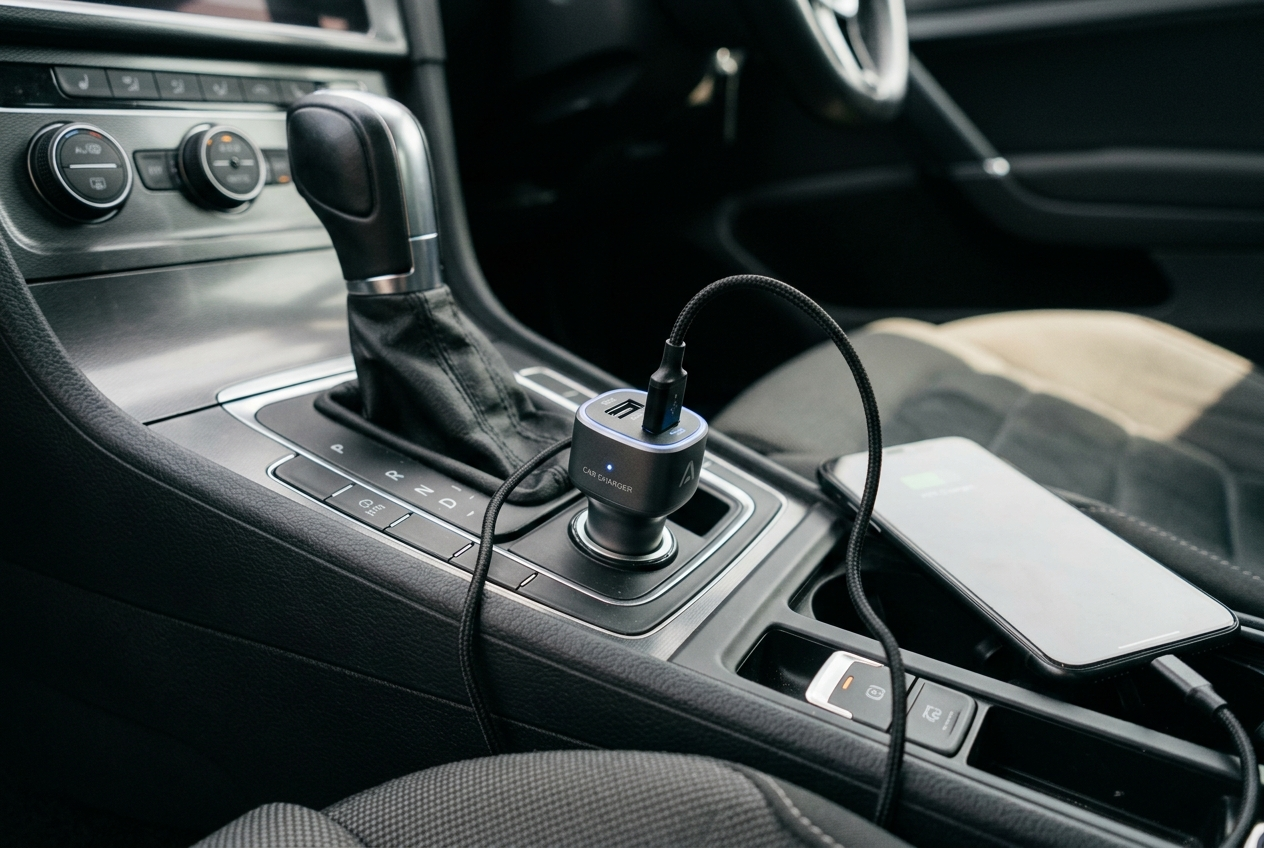
I use one in every car to keep batteries topped up on the road.
A simple breakdown:
- Power source: Most car chargers plug into the 12V accessory socket (cigarette lighter). Larger vehicles and trucks may use 24V systems. Good chargers auto-detect input voltage and adapt.
- Output type: Car chargers provide USB-A, USB-C, or both. USB-C with Power Delivery (PD) enables faster charging for modern phones and some laptops.2 USB-A ports often support Quick Charge or smart charging.
- Conversion and regulation: The charger converts vehicle voltage to stable USB voltages (5V, 9V, 12V, etc.). It negotiates with the device to supply the right current via protocols like PD or QC.
- Physical form factors: Chargers come as single-port plugs, multi-port hubs, adapters with displays, and integrated wireless charging mounts. Each form fits different needs.
I treat car chargers as essential travel gear rather than optional accessories.
What convenience do car chargers bring us?
I stopped worrying about low batteries during commutes and trips after I started using the right chargers.
Car chargers let you keep devices powered during drives, support navigation and streaming, enable hands-free calls, and reduce anxiety about battery life on long trips.
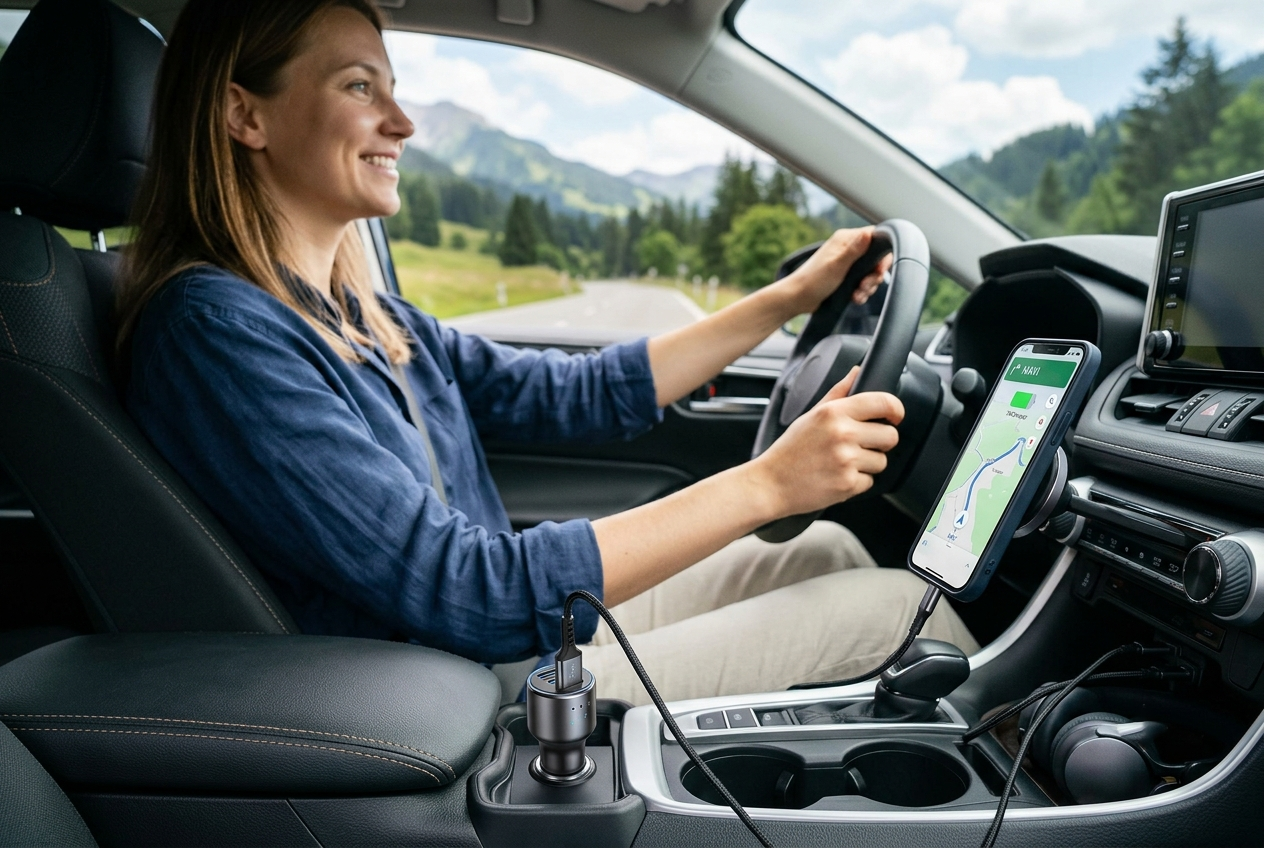
I rely on a car charger for maps, music, and emergency calls.
Key conveniences explained:
- Continuous navigation: GPS apps drain batteries fast. A car charger keeps the phone powered through long navigation sessions. This prevents sudden shutdowns on unfamiliar roads.
- Media and streaming: Passengers often stream music or podcasts. Chargers avoid interruptions and let drivers focus on the road.
- Hands-free calls and safety: Phones used for hands-free calls or voice assistants need constant power for extended conversations. A charger supports these functions without battery worries.
- Charging multiple devices: Modern chargers charge phones, tablets, dash cams, and portable Wi-Fi hotspots simultaneously. This is handy for families or business travelers.
- Emergency readiness: A charged phone is critical in emergencies. Car chargers ensure your devices are ready when you need them.
- Reduced need for power banks: With a reliable car charger, you may carry fewer power banks and cables. That saves space and simplifies packing.
These conveniences make a good car charger a small but high-value accessory.
What types of car chargers are there?
I compared models to see which type fits different driving habits.
Car chargers come as basic USB adapters, multi-port chargers, PD (USB-C) fast chargers, wireless charging mounts, and specialty units for dash cams or laptops. Pick the type that fits your devices and use.
I have a USB-C PD charger for my phone and a dedicated dash-cam power adapter for continuous recording.
Type breakdown and use cases:
- Single-port USB-A adapters: These are cheap and compact. They work well for a single phone or small device. They often support basic smart charging or Quick Charge up to certain watts. They are best for light users who need occasional charging.
- Dual or multi-port USB chargers: These provide two or more ports so multiple passengers can charge simultaneously. Watch how total power is shared between ports. Better units manage distribution intelligently and keep charging stable.
- USB-C PD chargers: These support Power Delivery and can deliver higher wattages and faster charging for modern phones and some tablets. Some PD car chargers can reach 30W–65W, which is useful for charging laptops that accept PD from a car. If you plan to charge a tablet or laptop, choose a PD-enabled model.
- Quick Charge (QC) enabled USB-A ports: Many USB-A ports use Qualcomm Quick Charge to speed charging for compatible phones. This works well for older Android devices that support QC.
- Wireless car chargers and magnetic mounts: These combine a phone holder with Qi wireless charging or MagSafe-style magnetic charging. They keep the phone visible for navigation while charging. They require good alignment and may charge slower than wired PD. Choose models with strong grips and fast wireless output.
- Dash-cam or hardwired units: Dash cams need continuous power. Some chargers offer a constant-12V output or wiring kits that connect directly to the fuse box for uninterrupted recording. These are specialized and often include voltage cutoff protection to avoid draining the battery.
- Inverter-based chargers and high-power outlets: If you need to run AC devices, inverters provide AC sockets from the car battery. They are larger and consume more power, so they suit specific needs like charging DSLR batteries or running a laptop charger that does not support PD.
- Cigarette lighter splitters and hubs: These convert one socket into multiple sockets or add additional USB ports. Quality varies, and poorly made splitters can overload the socket or cause loose connections.
Choose the type based on how many devices you charge, whether you need fast PD charging, and whether you require a mount or dash-cam support.
Key Factors in Choosing a Car Charger
I use a checklist to pick reliable car chargers for different vehicles.
Choose a car charger by checking power output and protocols, port count, compatibility, safety protections, build quality, thermal design, and brand reputation. Test in real driving conditions before relying on it.
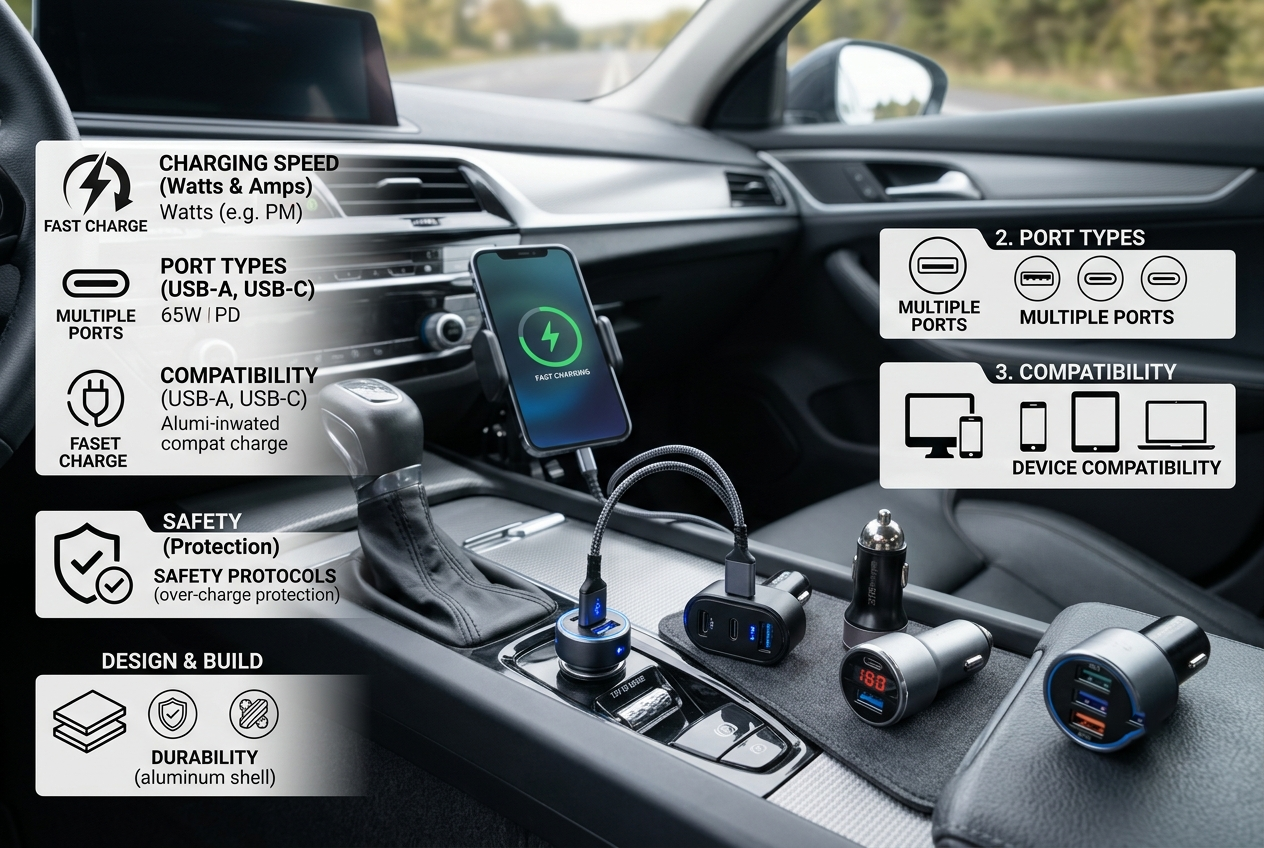
I always test a new charger on a short drive before using it on long trips.
Detailed checklist and buying tips:
- Power output and protocols: Match the charger’s wattage and protocols to your devices. For phones, 18W–30W PD is fast. For tablets or PD-capable laptops, look for 45W–65W PD. Check if USB-A ports support Quick Charge and at what wattage.
- Port count and power sharing: Consider how many ports you need. Read the fine print to see total output and per-port limits. Good chargers allocate power dynamically so multiple devices charge effectively.3
- Compatibility and PD profiles: Ensure the charger supports the voltage/current pairs your devices use. Some laptops require specific PD voltages; check the manufacturer’s specs. Avoid chargers that list ambiguous or nonstandard outputs.
- Safety features and certifications: Look for OVP, OCP, SCP, OTP, and FOD protections. Certifications like CE, FCC, RoHS, and USB-IF (when available) indicate the charger passed safety and interoperability tests.4 For dash-cam wiring, choose a unit with battery discharge protection.
- Build quality and thermal design: Pick chargers with solid construction and good heat dissipation. Metal housings, vents, or thoughtful internal layouts help. Avoid chargers that get hot quickly in reviews. Excess heat reduces life and performance.
- Connector fit and socket stability: The plug should fit snugly in the car socket without wiggle. A loose fit causes intermittent charging. Some chargers include anti-loosen springs or a locking collar.
- Cable quality: Use good USB-C or USB-A cables rated for the power you need. Cheap cables reduce charge speed and can overheat. For high-wattage PD, prefer e-marked USB-C cables.
- Wireless charger alignment and grip: If using a wireless mount, ensure the holder aligns the phone reliably and secures it on bumpy roads. Magnetic mounts need MagSafe or strong magnets to keep alignment.
- Size and visibility: A low-profile charger stays out of the way and avoids obstructing console controls. Wireless mounts should position the phone for safe, legal viewing while driving.
- Price and brand reputation: Avoid extremely cheap, no-name chargers.5 Reputable brands invest in safety testing and quality components. Read user reviews about long-term reliability.
- Warranty and support: Good warranty terms and clear customer support channels are valuable if the charger fails or behaves poorly.
- Special needs: For dash cams, choose hardwired kits with low-voltage cutoff. For trucks or RVs with 24V systems, confirm the charger supports 24V input. For multiple passengers, choose chargers with enough ports and total wattage to serve everyone.
I use this checklist to pick a charger for my car and recommend testing it with your devices before long trips.
Conclusion
Pick a car charger that matches device power needs, supports PD or QC protocols, has safety protections and good build quality, and comes from a trusted brand.
-
"Charging station", https://en.wikipedia.org/wiki/Charging_station. This source explains the basic function of car chargers, including their role in converting vehicle voltage to USB power for charging devices. Evidence role: definition; source type: encyclopedia. Supports: Car chargers convert vehicle electrical supply into USB power for charging devices.. ↩
-
"Basan Cord 36W Fast Charging PD USB-C & USB-A Car …", https://bookstores.umn.edu/product/technology-supply/basan-cord-36w-fast-charging-pd-usb-c-usb-car-charger. This source discusses USB-C Power Delivery (PD) and its ability to provide faster charging for compatible devices. Evidence role: mechanism; source type: education. Supports: USB-C with Power Delivery (PD) enables faster charging for modern phones and laptops.. Scope note: The source may focus on USB-C PD in general rather than car chargers specifically. ↩
-
"Multiple devices charging explained – Zens", https://zens.tech/pages/multi-device-charging-explained. This source explains dynamic power allocation in chargers and its benefits for multi-device charging. Evidence role: mechanism; source type: research. Supports: Dynamic power allocation helps chargers effectively charge multiple devices simultaneously.. Scope note: The source may not focus exclusively on car chargers. ↩
-
"Compliance", https://www.usb.org/compliance. This source explains the significance of CE, FCC, RoHS, and USB-IF certifications for electronic devices. Evidence role: definition; source type: institution. Supports: Certifications like CE, FCC, RoHS, and USB-IF indicate safety and interoperability testing for chargers.. Scope note: The source may not cover all certifications relevant to car chargers. ↩
-
"Dangers of Batteries and Cell Phone Chargers", https://www.villageofhartland.wi.gov/474/Dangers-of-Batteries-and-Cell-Phone-Char. This source discusses the risks associated with using low-quality, unbranded electronic chargers. Evidence role: expert_consensus; source type: education. Supports: Extremely cheap, no-name chargers may pose risks to device safety and reliability.. Scope note: The source may generalize risks without specific examples of car chargers. ↩